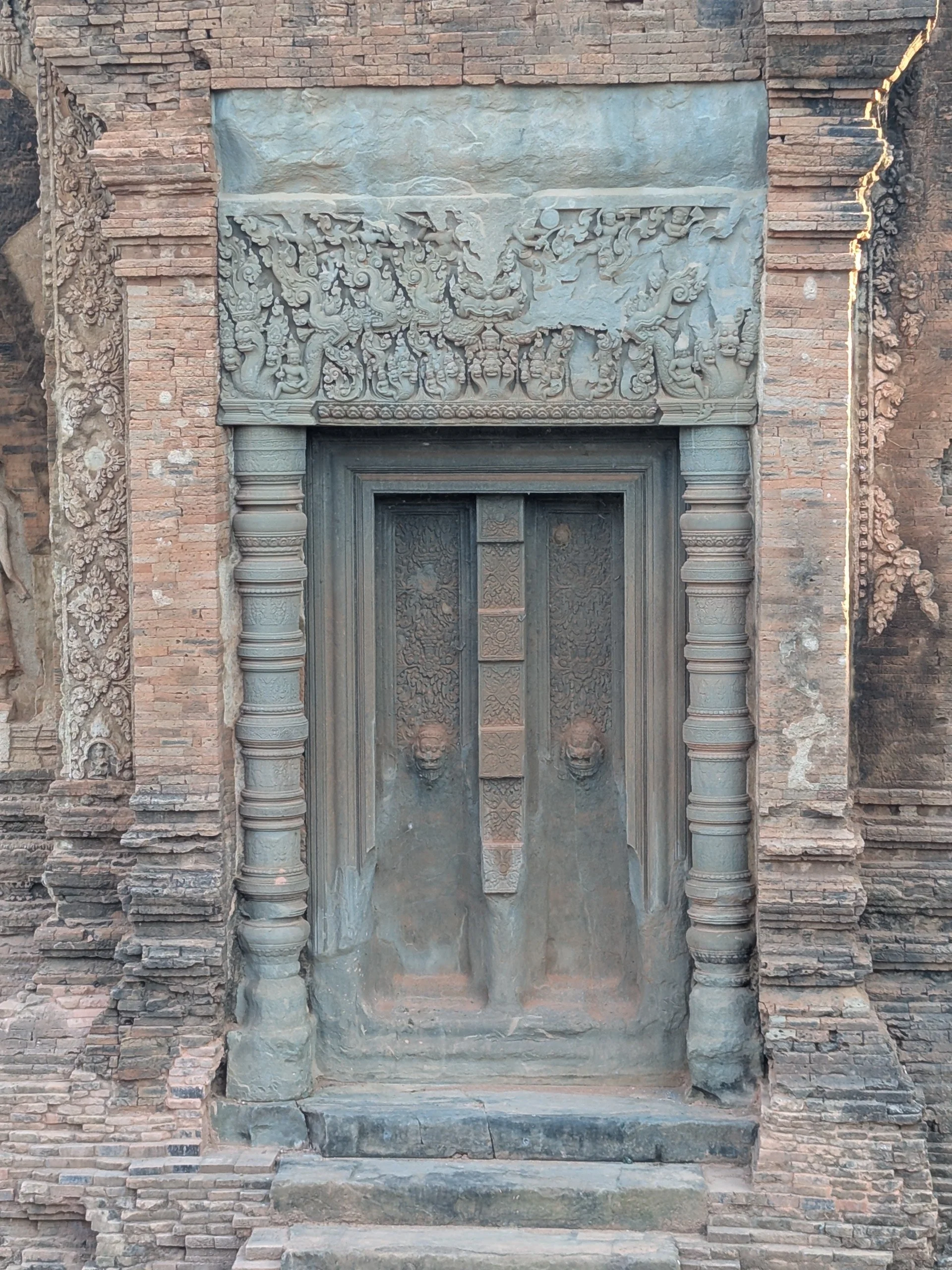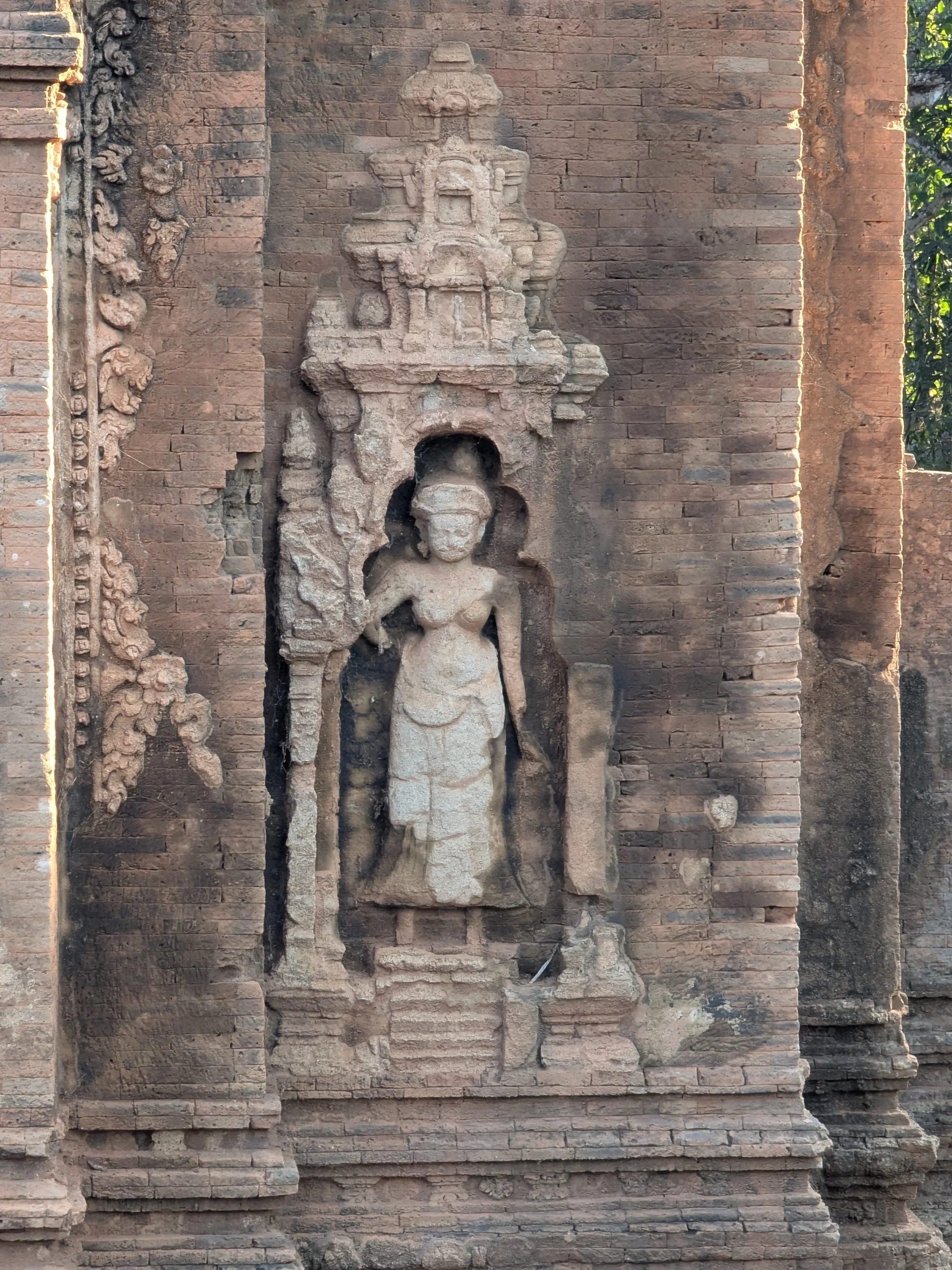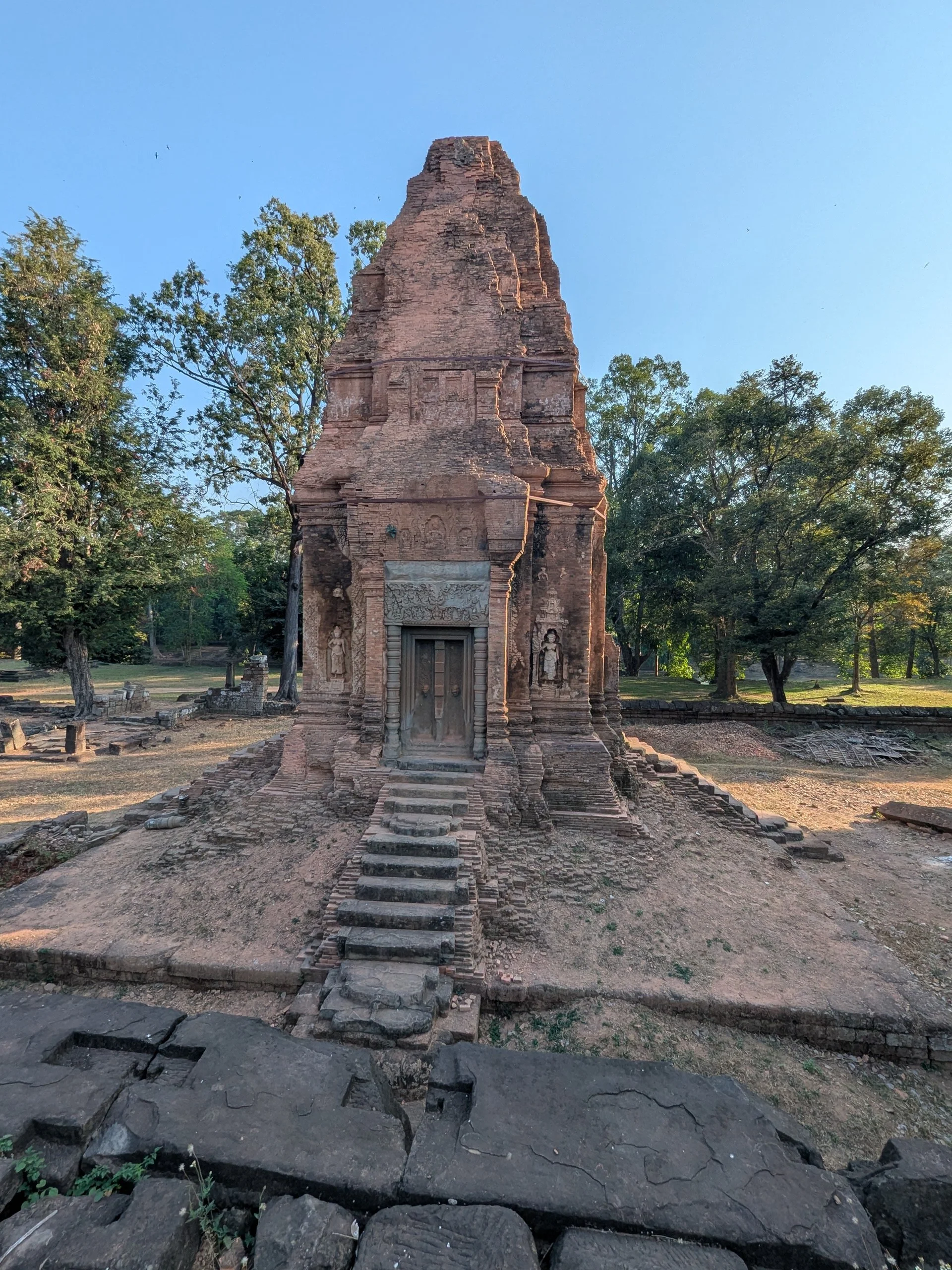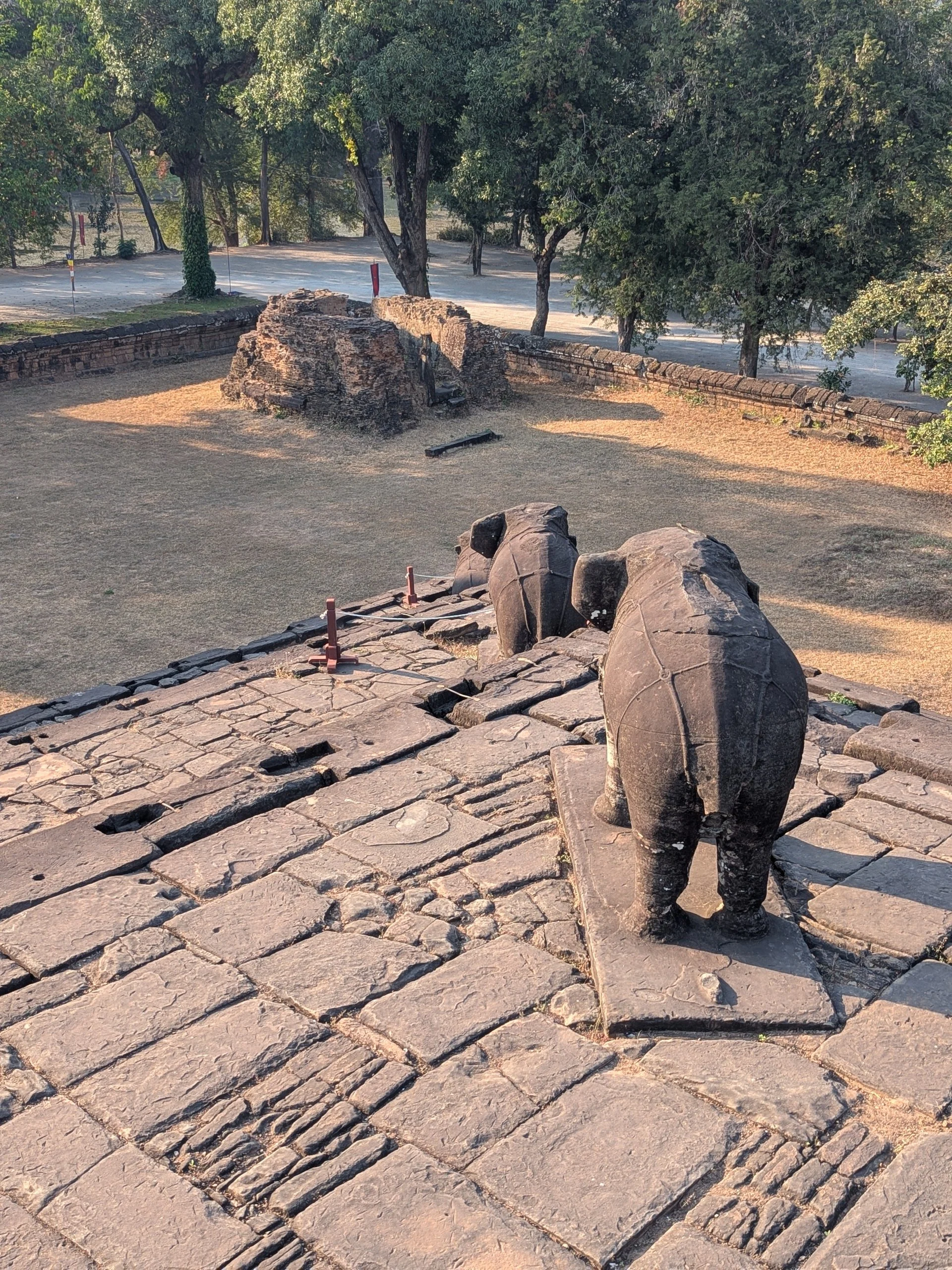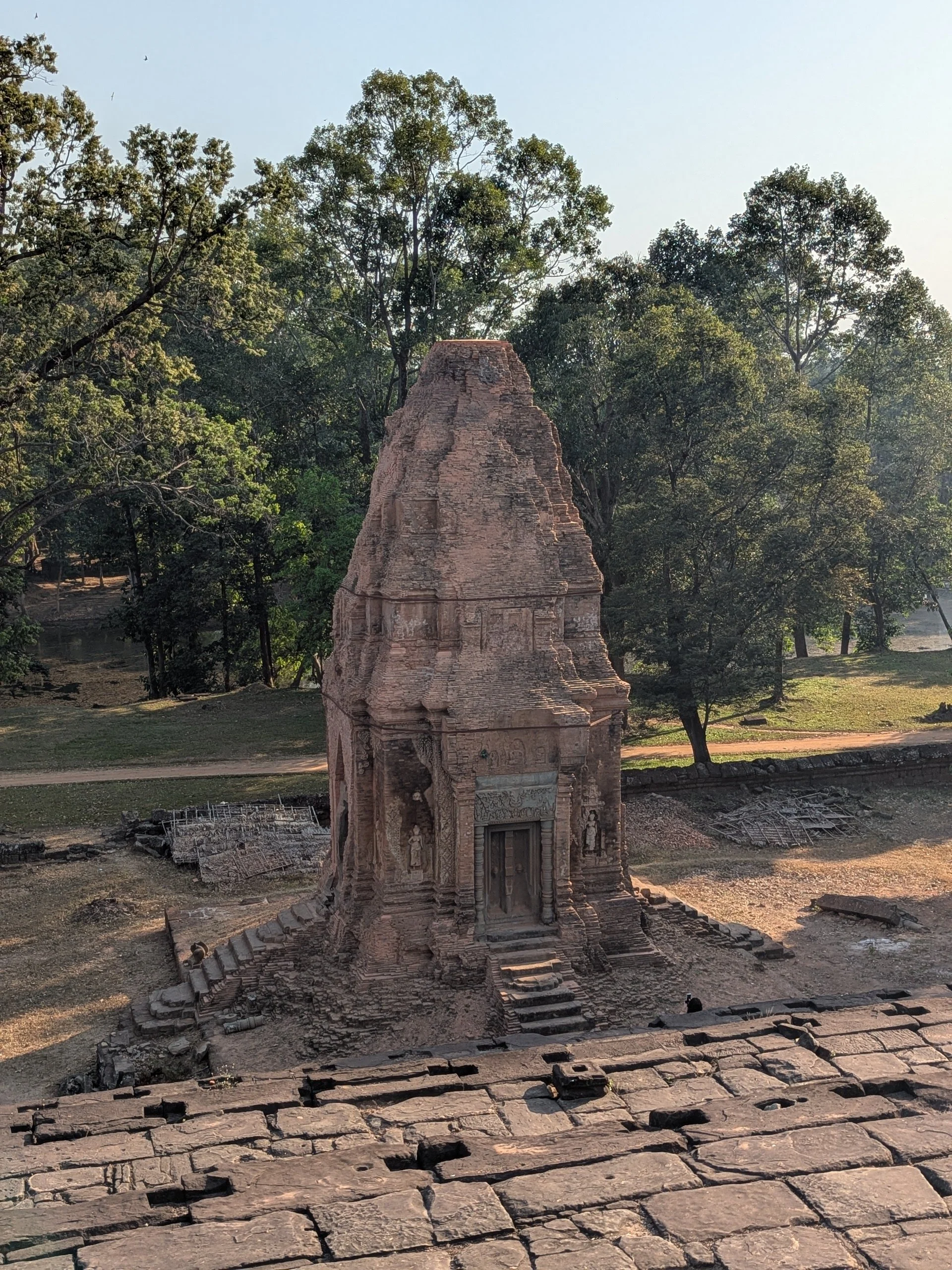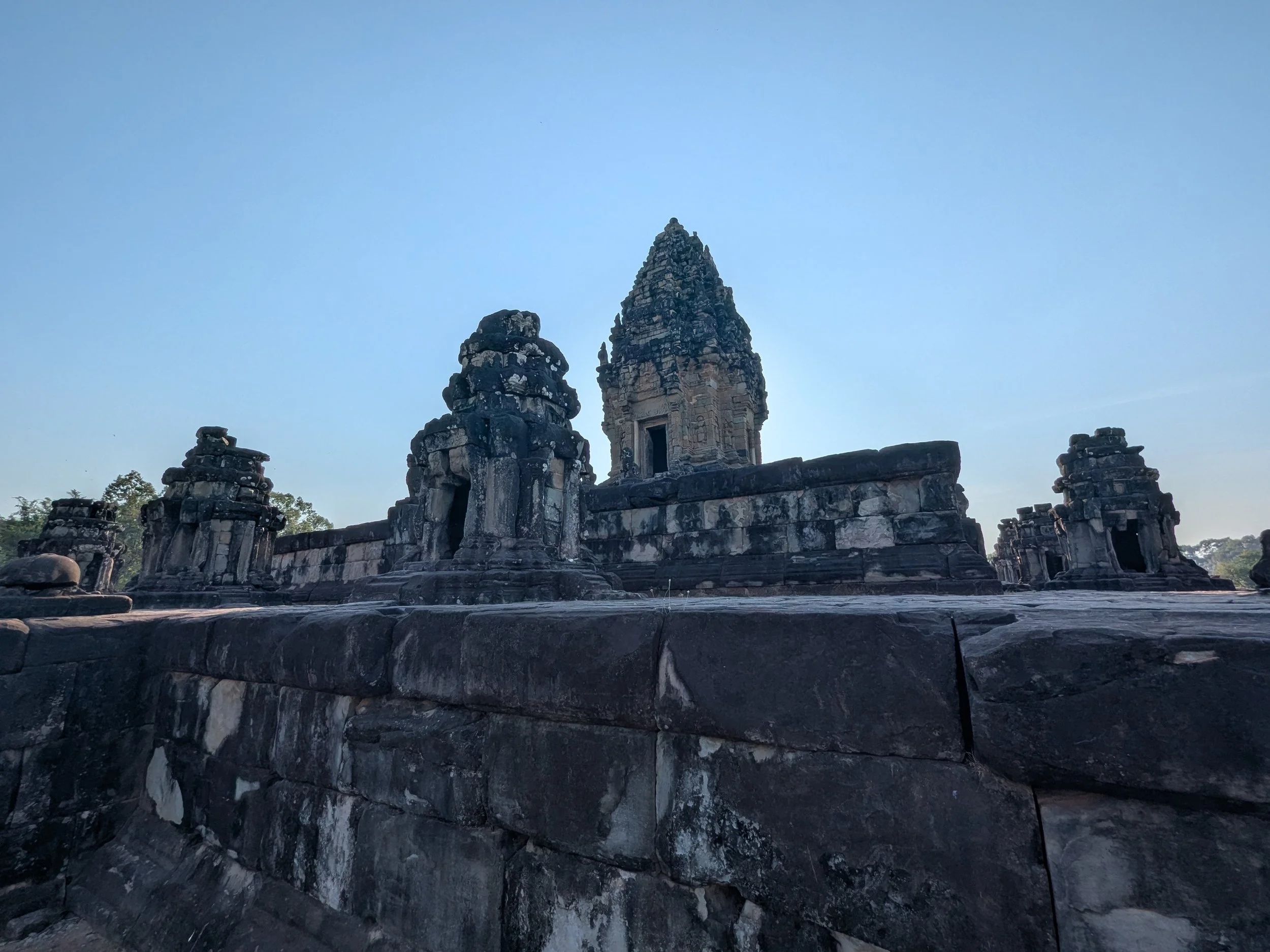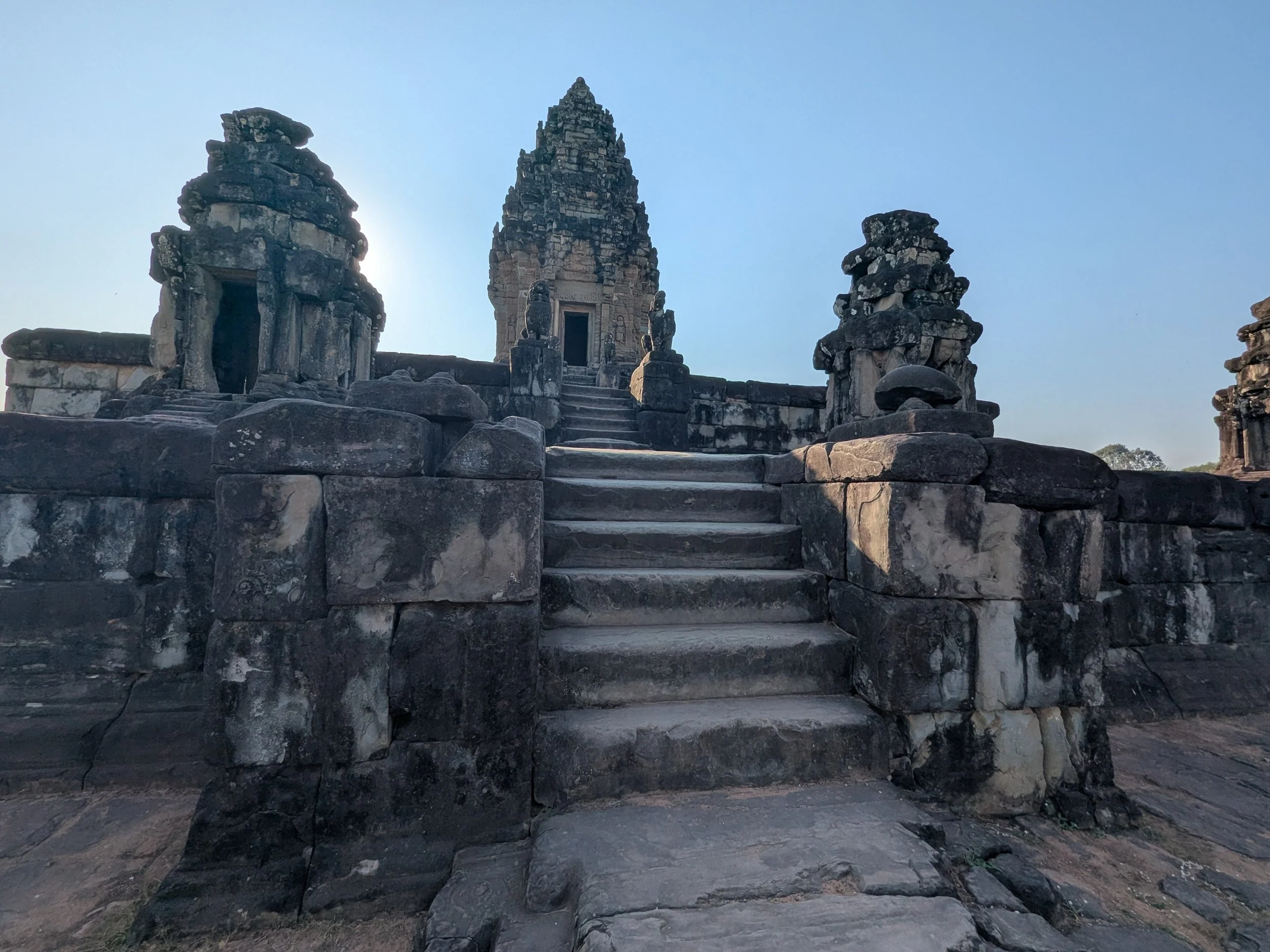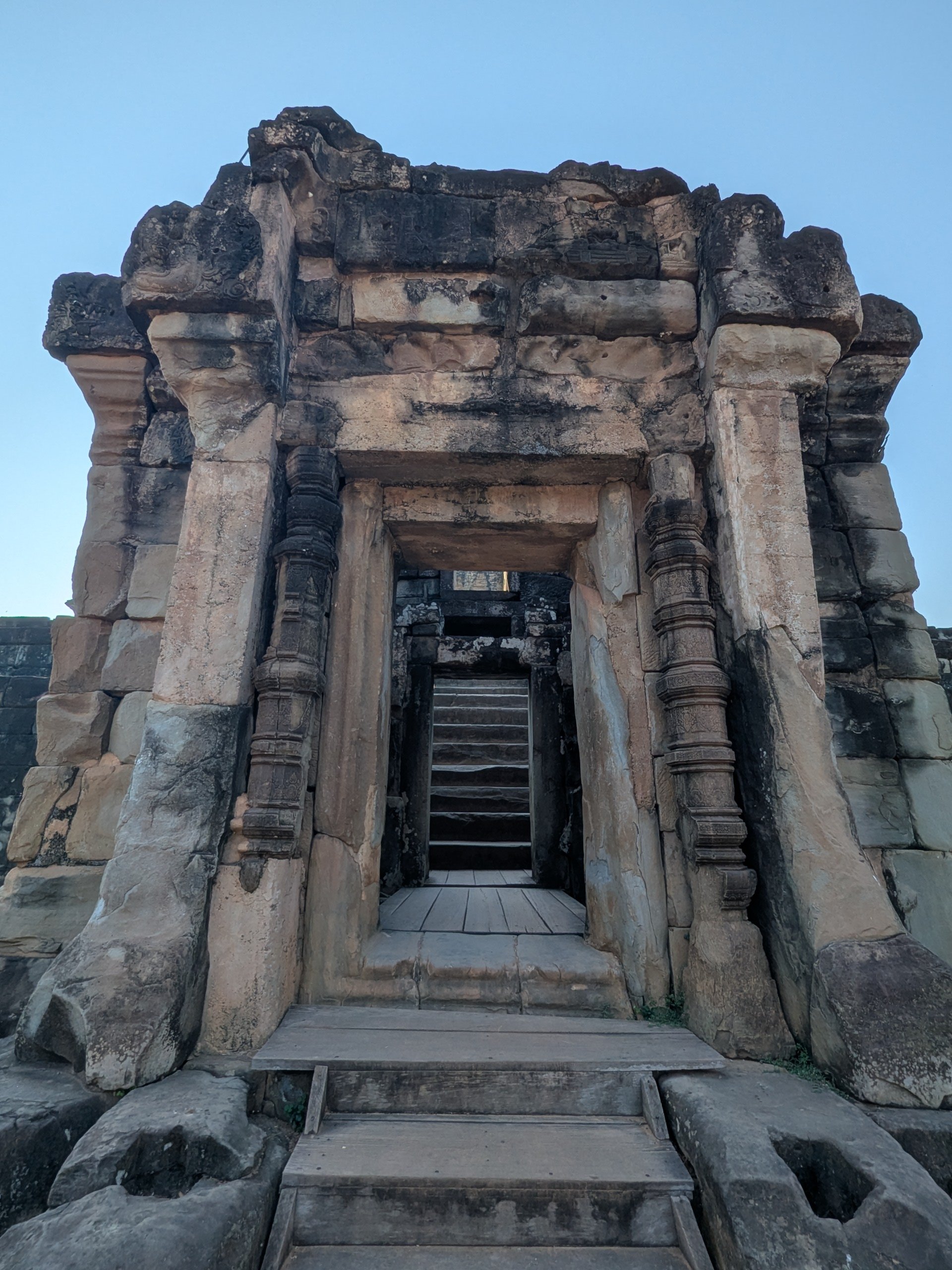
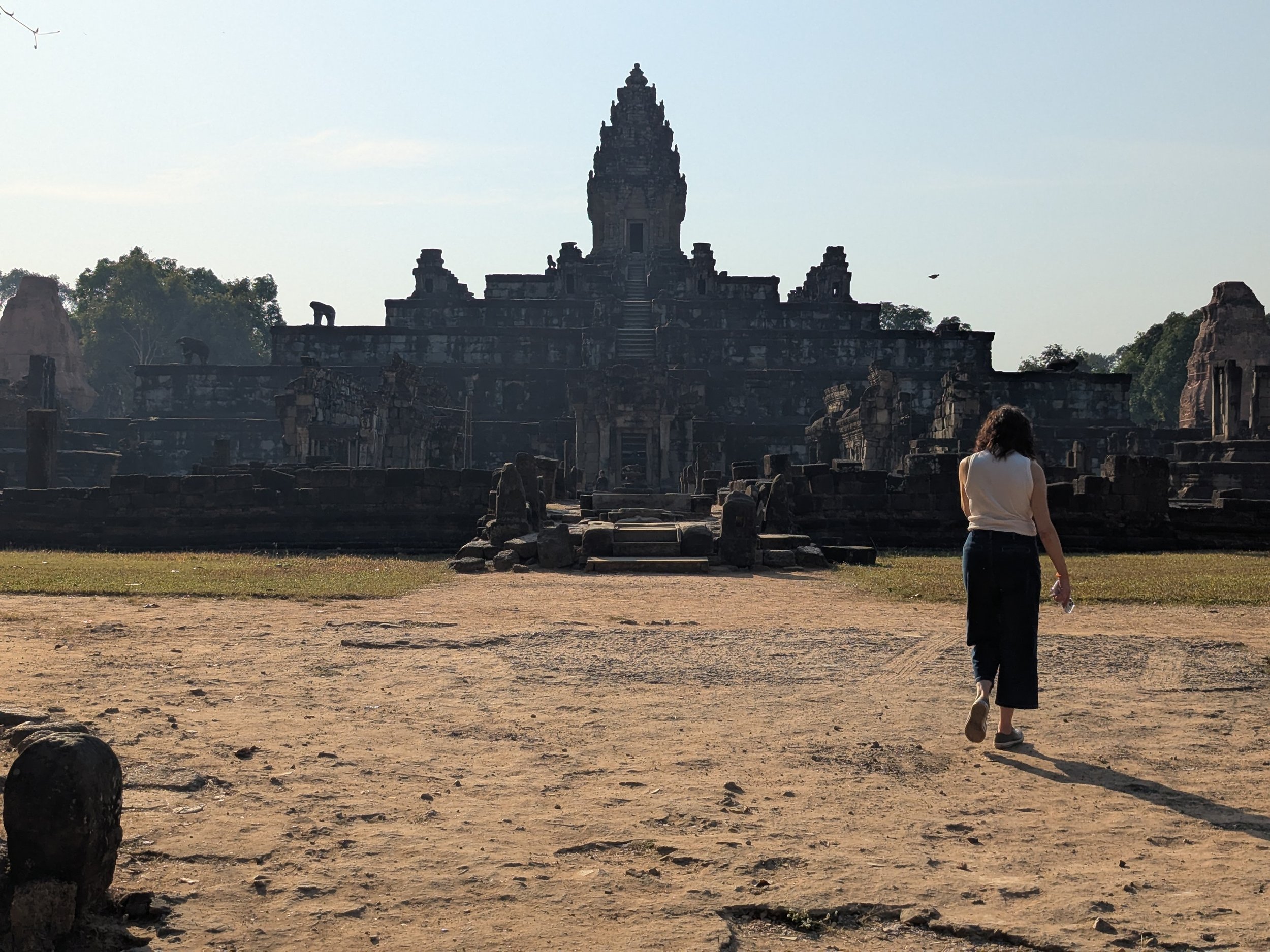
Bakong Temple — Siem Reap, Cambodia
/ChatGPT Assisted:
Bakong Temple is one of the earliest monumental stone temples of the Angkor period, built in the late 9th century under King Indravarman I. Conceived as a stepped pyramid surrounded by moats and concentric enclosures, Bakong established the architectural template of the Khmer “temple-mountain,” symbolically aligning royal authority, cosmology, and landscape through a carefully ordered sacred center.
Key facts
Constructed: 881 CE
Religion: Hindu (dedicated to Shiva)
Founder: King Indravarman I
Architectural style: Preah Ko / early Khmer temple-mountain
Location: Roluos Group, 15 km east of Siem Reap
Historical background
Bakong served as the state temple of Hariharalaya, the first capital of the Angkorian era. Its dedication stele records the consecration of a central linga named Śrī Indreśvara, blending the king’s name with Shiva’s divine epithet. The temple affirmed divine kingship and introduced sandstone masonry on a grand scale. Though its political role ended when the capital shifted to Angkor under Yasovarman I, Bakong remained a living shrine for centuries, later acquiring Buddhist elements and a nearby modern monastery.
Bonus: Scroll down for an esoteric. poetic interpretation of the mystical site of Bakong Temple.
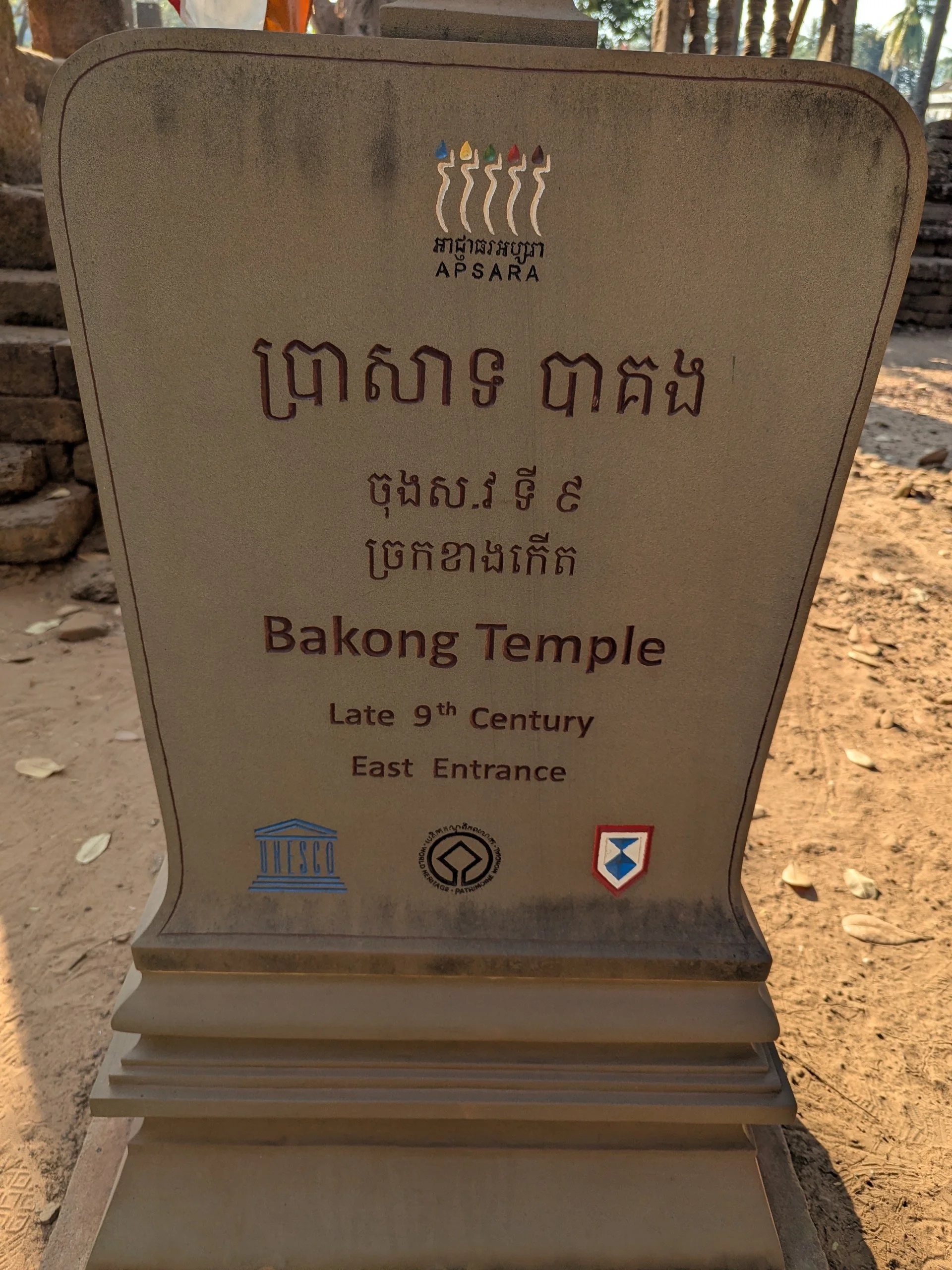
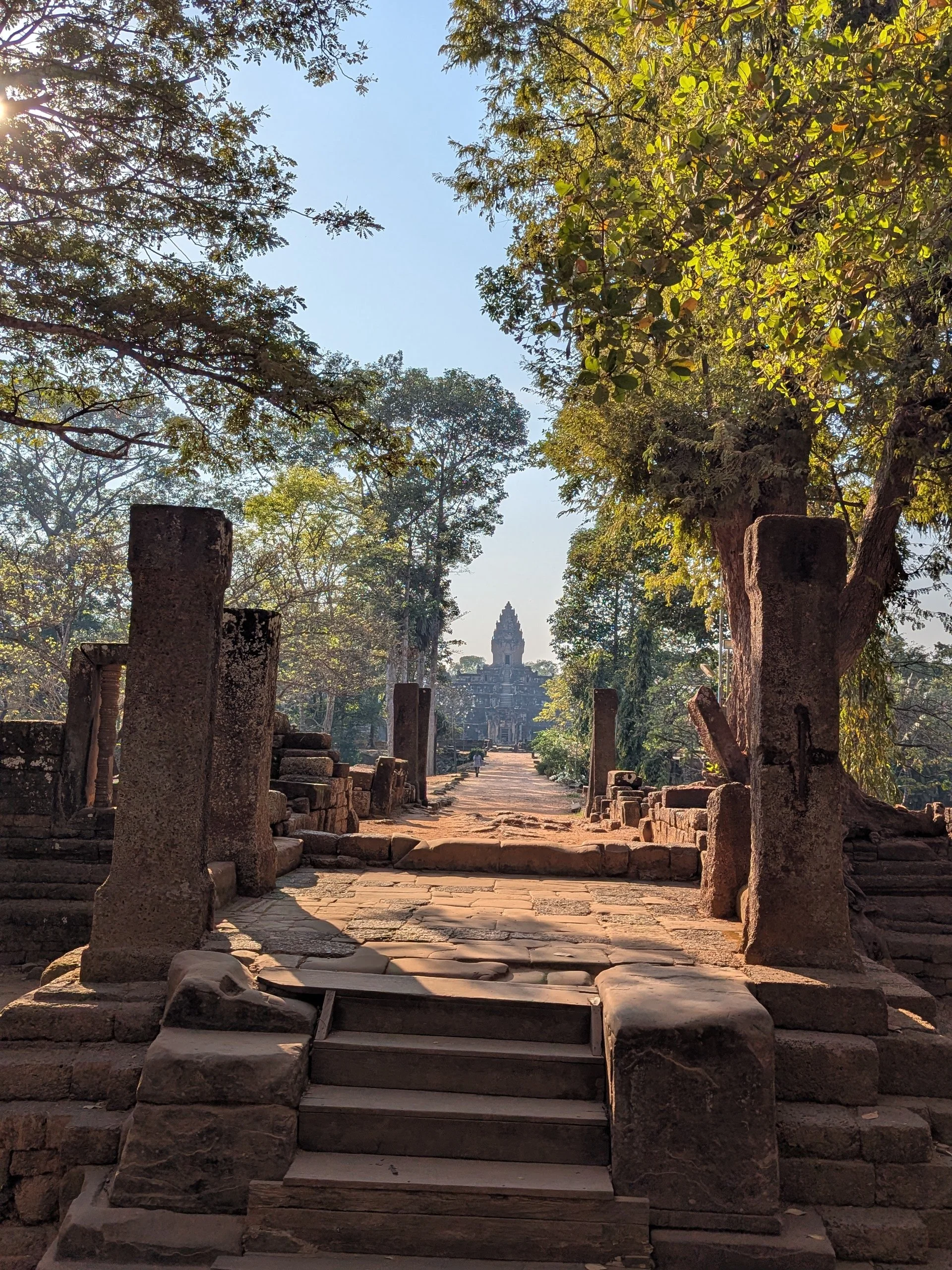
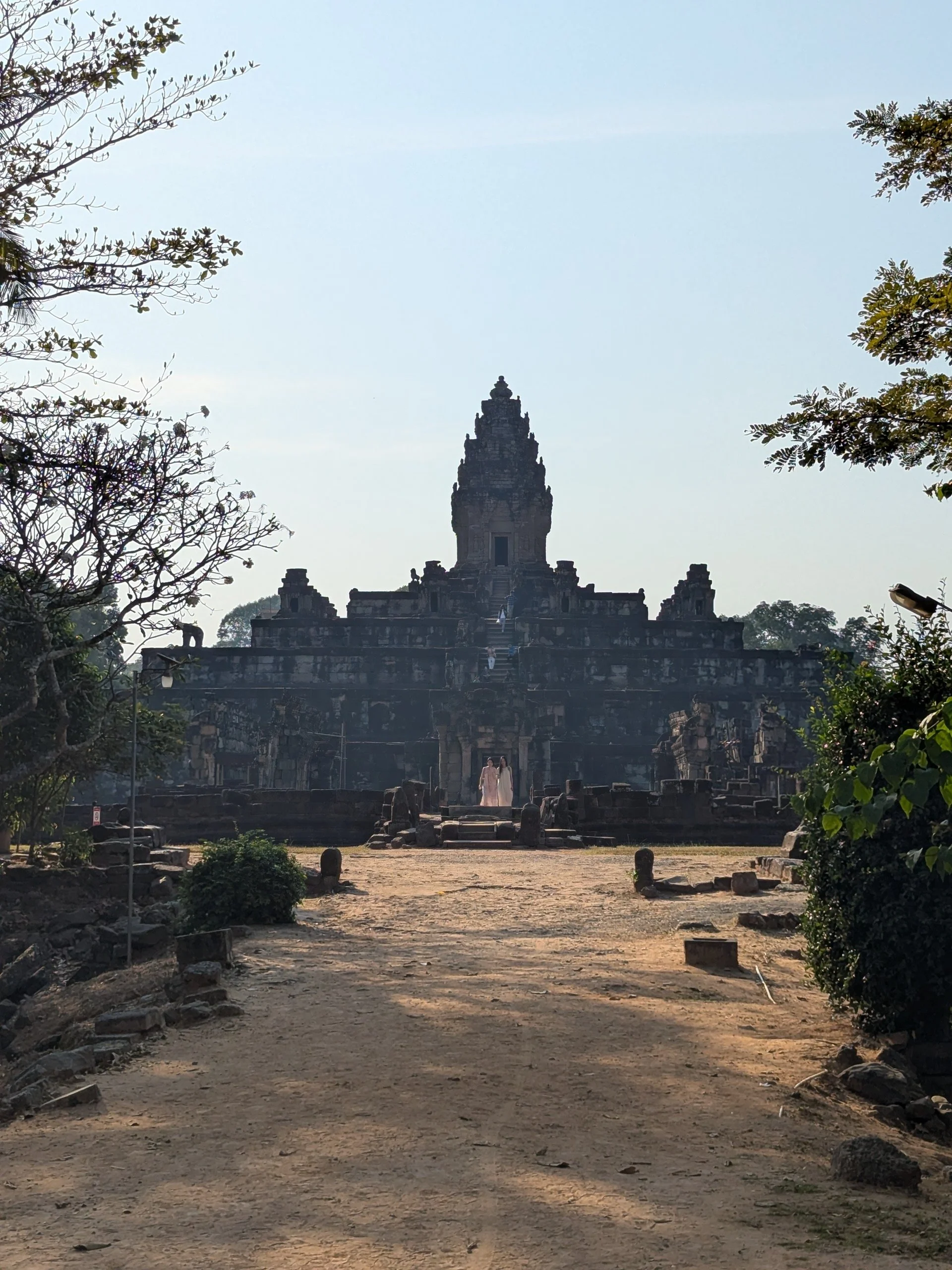
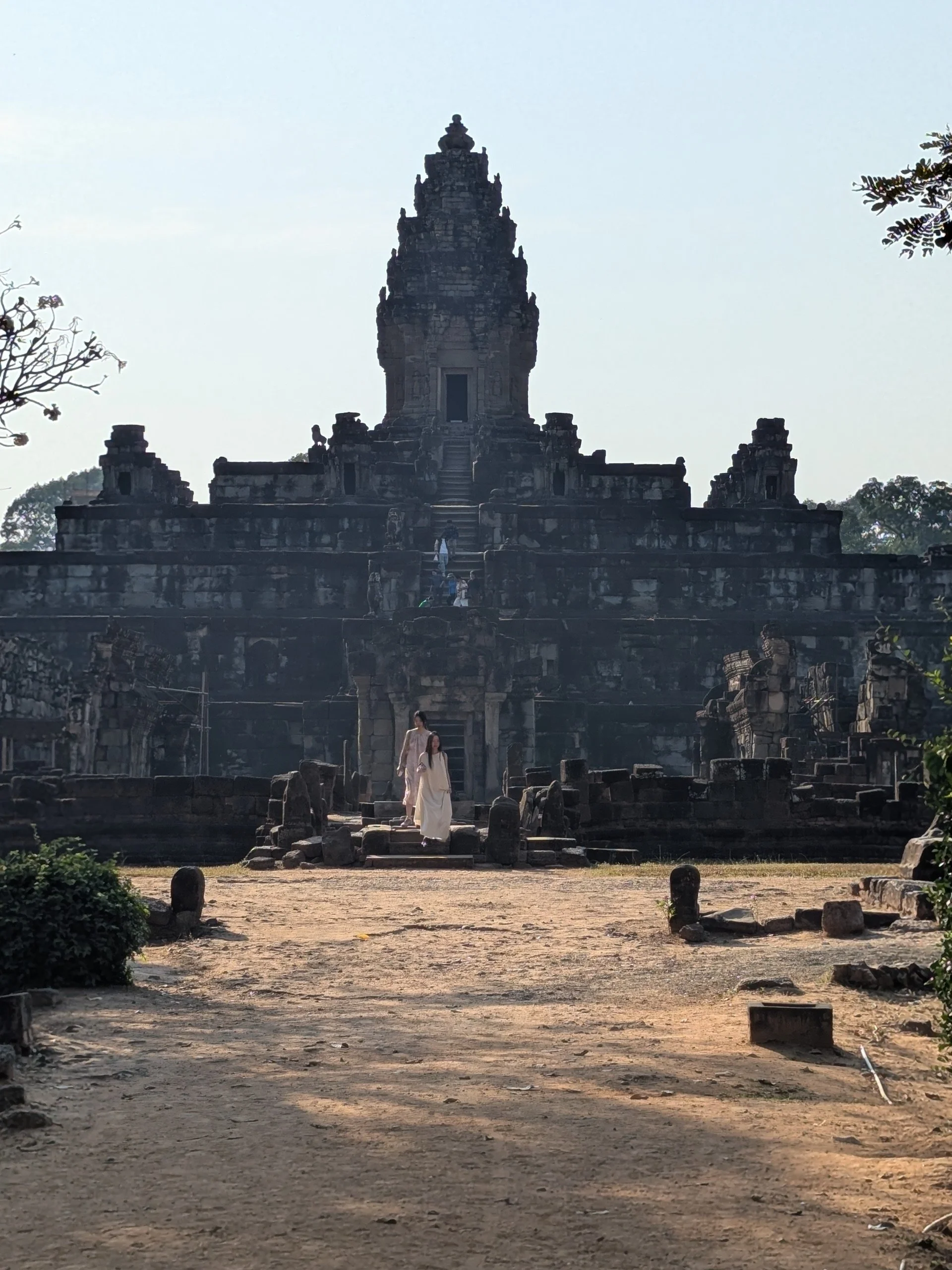
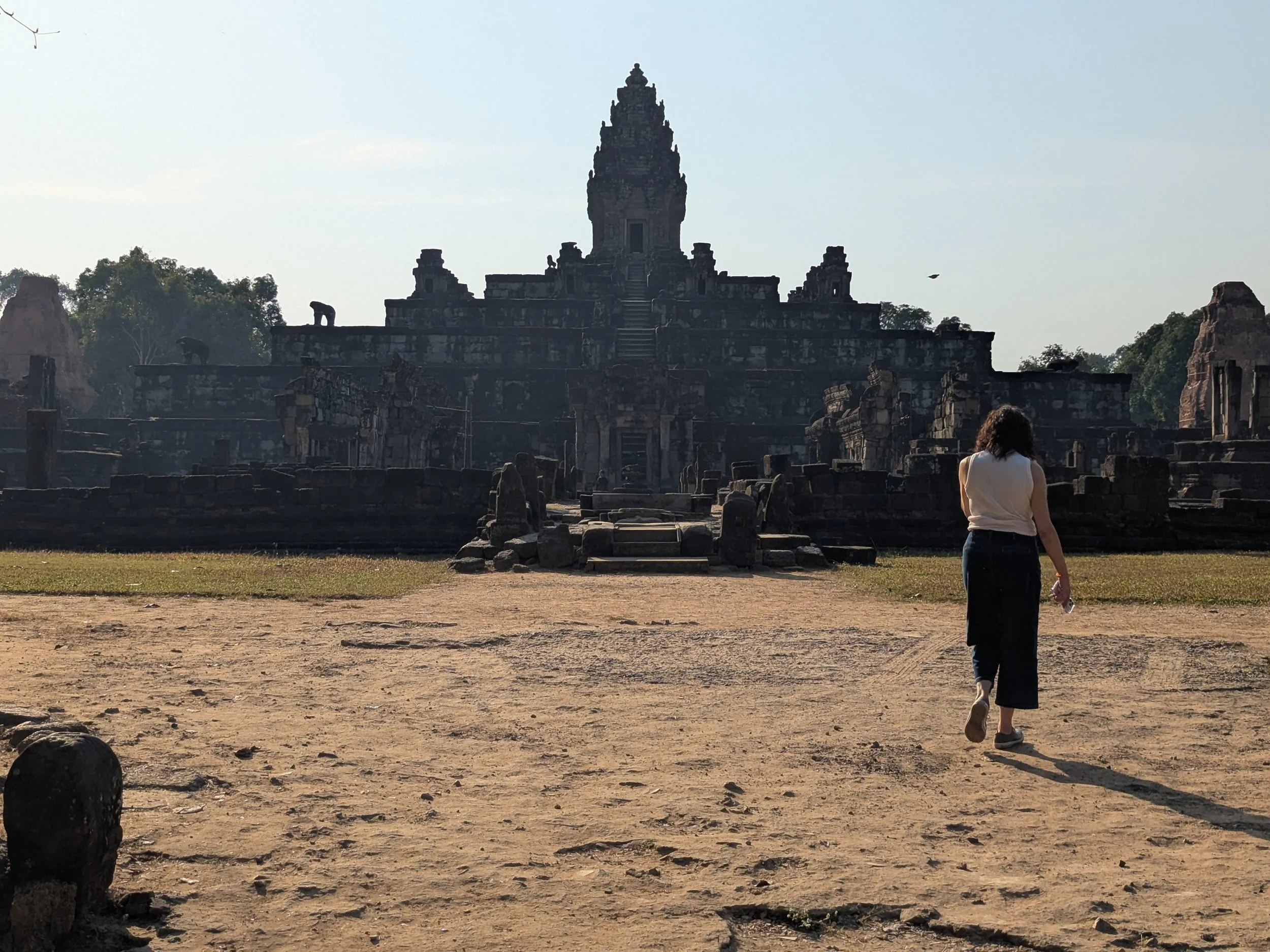
Bakong Temple — Esoteric Architecture
Bakong Temple is not merely an early Angkorian monument; it is a cosmogram rendered in stone. What follows is a symbolic, non-computational interpretation—no numerical encoding, no data abstraction—only pattern, orientation, and lived geometry.
1. The Stepped Mountain: Axis of Coherence
Bakong’s stepped pyramid embodies Mount Meru, but esoterically it functions as a graduated coherence ladder. Each ascending terrace reduces sensory multiplicity and increases inward alignment. Movement upward is not conquest; it is attenuation of noise. The summit does not “grant power”—it removes distortion.
2. Concentric Enclosures: Phase Thresholds
The surrounding moats and walls are not defensive. They are phase membranes. Passing each boundary signals a subtle shift in state—outer life → ritual life → inner stillness. Water here is not symbolic emotion; it is reflective latency, holding the sky long enough for the mind to quiet.
3. Cardinal Alignment: Breath in Stone
Bakong’s cardinal precision is a breathing diagram for the land. East receives; West releases. North stabilizes; South dissolves. Walking the axes entrains the body into a slow, balanced cadence—an architecture that teaches orientation before instruction.
4. Lintels and Guardians: Threshold Psychology
The carvings are not decorative myth. They function as psychological gatekeepers—forms that surface the unconscious at moments of transition. Their purpose is not to frighten, but to make visible what must be integrated before proceeding.
5. The Central Shrine: Silent Compression
At the apex, the space tightens. This is deliberate. The shrine compresses attention into single-point presence. No spectacle, no narrative climax—only stillness dense enough to notice itself.
6. Royal Foundation, Communal Field
Though built under Indravarman I, Bakong is not an ego monument. It is a public stabilizer—a place where individual nervous systems could entrain to a shared rhythm. Power here was custodial, not extractive.
Integrative Reflection
Bakong does not ask to be decoded. It asks to be walked slowly, circled patiently, and left without conclusion. Its esoterica is practical: How does a human body remember balance when surrounded by stone that breathes?